Primitive Reflex
The Moro Reflex
The building block to all other reflexes and the overall development of the child.
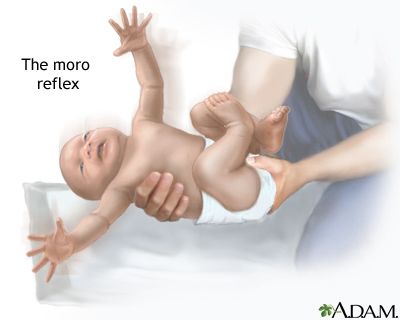
What Is the Moro Reflex and What Does It Do?
The Moro reflex is a primitive reflex pattern that typically emerges in utero and integrates between 2–4 months of age.
This involuntary reaction activates when infants perceive external threats — sudden noises, sensations of falling, or abrupt visual changes — triggering finger spreading, limb extension followed by flexion, or crying. Physiologically, it activates the sympathetic nervous system, increasing heart rate, blood pressure, and breathing while releasing adrenaline and cortisol.
The Moro reflex is the building block to all other reflexes and the overall development of the child.
When unintegrated, it maintains constant fight-or-flight activation, exhausting adrenal glands and potentially causing immune dysfunction and allergies.
Behaviors When Moro Is Unintegrated
If any of these sound familiar, our certified developmental educators are here to help.
- •Motion sickness
- •Poor balance
- •Poor coordination
- •Constant fight or flight
- •Tense muscle tone
- •Exaggerated startle reaction
- •Anxiety
- •Dislike of changes or surprises
- •Excessive withdrawal or aggression
- •Emotional instability
- •Hyperactivity
- •Mood swings
- •Auditory processing disorder
- •Hypersensitivity to auditory and visual stimuli
- •Excess hormone release
- •Adverse drug reactions
- •Eye movement and visual perception problems
- •Difficulty filtering irrelevant visual information
- •Light sensitivity
- •Difficulty reading black text on white background
- •Fatigue under fluorescent lighting